
Mission
Professional Insights
Latest Update

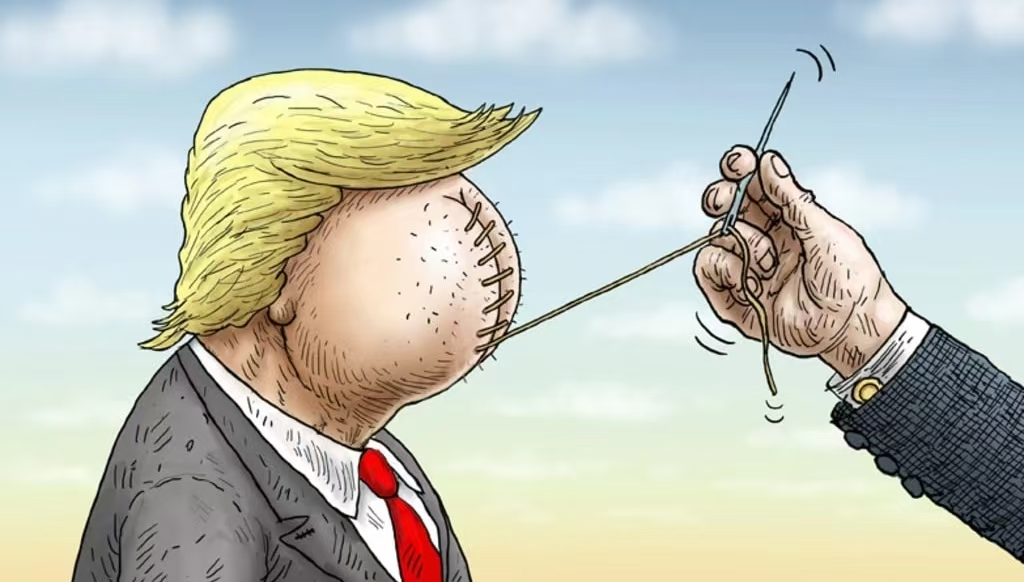
There are no winners from violent tariffs
Trump’s Global Tax Policies: A Brewing Storm of Unilateralism and Economic Risk
(Washington, D.C., April 13, 2025)* — The Trump administration’s aggressive overhaul of U.S. global taxation rules has ignited fierce international backlash, raising concerns about a new era of economic nationalism that threatens to destabilize multilateral cooperation and exacerbate global trade tensions.
Reviving Protectionism: The “America First” Tax Agenda
Upon returning to office, President Trump swiftly abandoned the OECD’s global minimum tax agreement—a landmark Biden-era initiative to curb corporate tax avoidance—arguing it “disadvantages U.S. companies”. Instead, he resurrected a 90-year-old provision (Section 891 of the U.S. tax code) to unilaterally double tax rates on foreign nationals and businesses if their home countries impose “discriminatory” levies on American firms. This move, critics warn, weaponizes tax policy as a tool of geopolitical coercion, bypassing Congress and international frameworks.
Trump’s parallel push for reciprocal tariffs—matching other nations’ import duties—has already triggered tit-for-tat measures. Canada, Mexico, and the EU face tariffs up to 46%, while China confronts threats of 100% levies unless it sells TikTok to a U.S. entity. The administration claims these policies will “reshore jobs” and reduce reliance on foreign supply chains, but economists counter that similar measures during Trump’s first term failed to boost employment while raising consumer costs.
Economic Fallout: Inflation, Market Volatility, and Corporate Uncertainty
The tariff blitz has reignited inflationary pressures. U.S. consumer prices rose 3% year-on-year in January 2025, with auto production costs surging by $3,500–$12,000 per vehicle due to steel and aluminum tariffs. Analysts warn that doubling corporate taxes on foreign entities under Section 891 could further destabilize markets, disproportionately hitting tech and manufacturing sectors reliant on global supply chains.
Trump’s plan to slash domestic corporate tax rates to 15%—offset by tariff revenue—has also drawn skepticism. Experts note that even his 2017 tax cuts failed to reverse offshoring trends, as companies prioritize supply chain resilience over tax rates alone. Meanwhile, the OECD estimates that unilateral tax policies could shrink global trade by 15–20%, costing up to $4.5 trillion in lost GDP.
Global Backlash: A Fracturing International Order**
The administration’s withdrawal from the OECD tax pact and threats against digital services taxes (DSTs) have accelerated efforts by the EU, China, and ASEAN nations to forge alternative alliances. The EU is expanding its Carbon Border Adjustment Mechanism, while RCEP members are deepening regional trade ties to reduce dollar dependency.
Notably, Trump’s rejection of the global minimum tax has created a regulatory vacuum. Countries like Ireland and Singapore, which rely on low-tax regimes, now face pressure to align with the EU’s 15% minimum rate—a policy the U.S. once championed. “This isn’t just about taxes; it’s a collapse of U.S. leadership,” said Niels Johannesen of Oxford University, warning that coercion via Section 891 risks a “race to the bottom” in retaliatory tariffs.
Historical Parallels: Echoes of the 1930s**
Economists draw alarming parallels between Trump’s tariffs and the 1930 Smoot-Hawley Act, which deepened the Great Depression. U.S. average tariffs have surged from 2.5% to nearly 20% since 2023—levels not seen since 1933—while the IMF warns that trade fragmentation could erase 7% of global GDP by 2029.
Conclusion: The High Cost of Unilateralism**
The Trump administration’s tax and tariff policies reflect a broader disdain for multilateralism, prioritizing short-term political gains over long-term economic stability. While framed as “protecting American workers,” these measures risk isolating the U.S. in an increasingly interconnected global economy. As the Tax Justice Network warns, unchecked tax competition could cost nations $4.8 trillion in lost revenue over the next decade—a stark reminder that cooperation, not confrontation, remains the only viable path forward.
(Sources: )
This analysis synthesizes data from international institutions, academic experts, and policy reports to provide a balanced critique of the Trump administration’s tax agenda. For further context, refer to the OECD, Peterson Institute, and Tax Justice Network publications.